|
| |
 |
| Eskimo's Barbecue |
| |
| Overview of Lesson Package |
| |
| |
|
|
| Age Group: |
|
10 years old | Primary 4 |
| |
|
|
| Classroom Size: |
|
40 students to 1 teacher |
| |
|
|
| Location: |
|
Artroom |
| |
|
Students are sitted in 8 groups of 5s. |
| |
|
A leader has been appointed in each group on the previous lesson. |
| |
|
Each group is also numbered from 1 to 8. |
| |
|
|
| Schedule: |
|
1 lesson per week x 2 weeks |
| |
|
Week 1 Drawing Lesson is denoted in  . . |
| |
|
Week 2 Colouring Lesson is denoted in  . . |
| |
|
|
| Time for each lesson: |
|
45 mins of lesson time + 15 mins of class movement & housekeeping |
| |
|
|
| Overview: |
|
Drawing and colouring in crayons |
| |
|
|
| ---------------------------------------------------------------------------------------------------------------------------------------------------- |
| Lesson Design |
|
Seeing: |
| Considerations |
|
Children from 9 years old are able to identify and differentiate visual |
| in relation to the |
|
qualities, and gather information from visuals and what they see. |
| Learning Outcomes: |
|
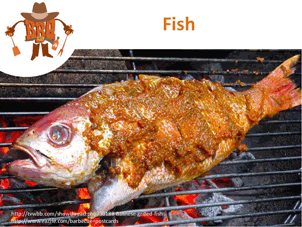
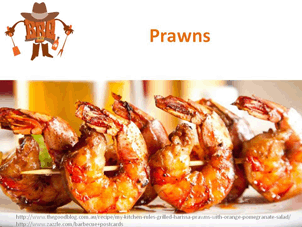
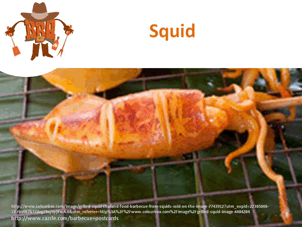
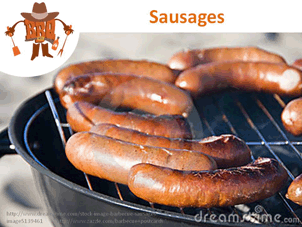
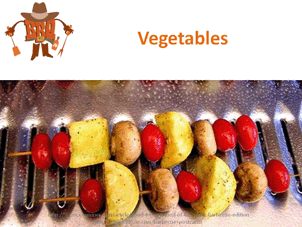
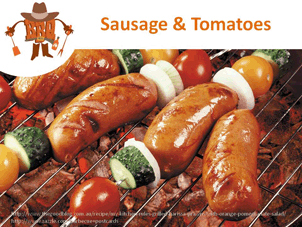
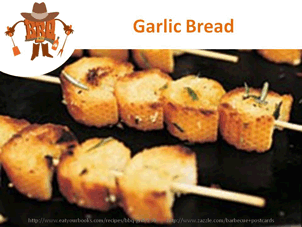
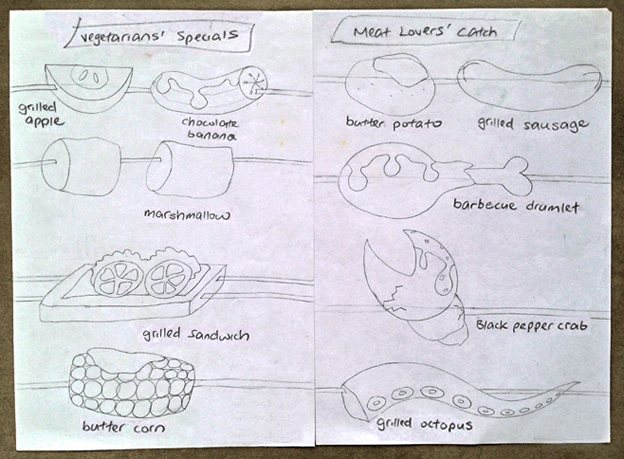
Thereby, teacher brings in photographs of barbecue food as visual references for the students to refer to and interpret into their own visual images. |
| |
|
|
| |
|
Expressing: |
| |
|
Children at 9 years old are also ready to share ideas and experiences in artworks and through artmaking. Henceforth, the teacher asks the students to recall what they saw and ate during the past barbecues they been too and encourages them to draw freely one food choice in their artwork. Students find art more fun when they are allowed to personalise their work. If they copy directly from the teacher, then no thinking is involved and we will not be able to assess their understanding of the combination of shapes to form an object. |
| |
|
|
| |
|
Appreciating: |
| |
|
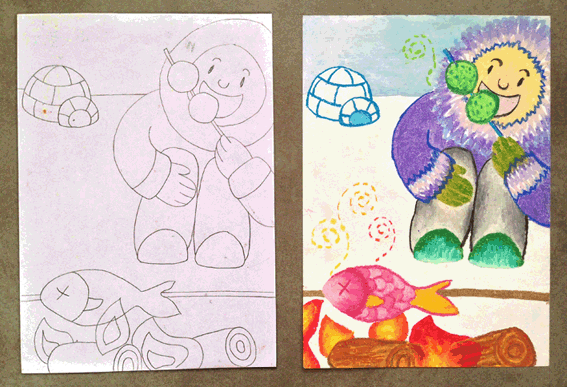
After finishing drawing, the children are keen to colour. At this age, they are ready to discuss artworks using basic art vocabulary (elements of art). Thereby, the lesson aims to level up their colour consciousness by relating to their personal reactions towards the difference in feeling between warm and cool. The children are asked to think of themselves as the eskimo in the cold place. Then, they are questioned on what kind of colours will they associate with the cold that they are experiencing? Teacher follows up by introducing the cool colours and ask the students to show the cold feeling on the colours of their clothing. |
| |
|
|
| |
|
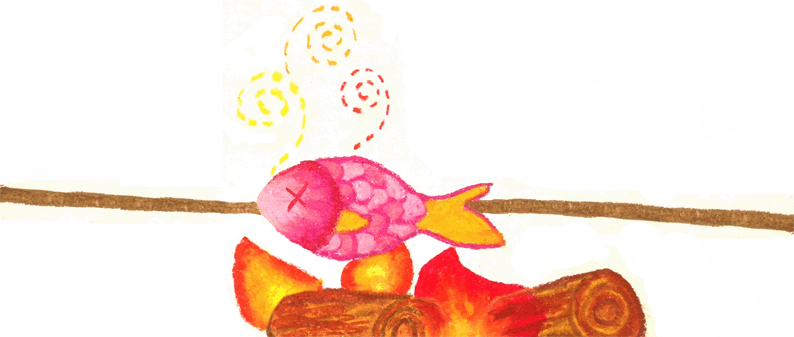
Vice versa the teacher asks them when it becomes too cold for the eskimo, what would they include to provide some warmth? The children may think of fire or hot food. They are asked to name the warm colours. Teacher introduces the warm colours and asks the students to show the warm colours in the fire and food. This art discussion with the teacher engages students in an exciting journey of thinking and talking about their new visual environment. |
| |
|
|
| |
|
|
| |
| |
| |
| Week 1 Lesson Details |
| |
|
|
| |
|
|
| Prerequisite Knowledge: |
|
Elements of Art (Geometric & Organic Shapes) |
| |
|
|
| New Knowledge, |
|
Students acquire: |
| Competency & Skill: |
|
- 21st Century Competency: Critical and Inventive Thinking |
| |
|
- Skill to draw more complex objects using EOA Shapes. |
| |
|
|
| New Art Vocabulary: |
|
Students learn the definition and application of: |
| |
|
- Proportion to draw well-balanced objects. |
| |
|
|
| Lesson Objectives: |
|
At the end of the lesson, students should be able to: |
| |
|
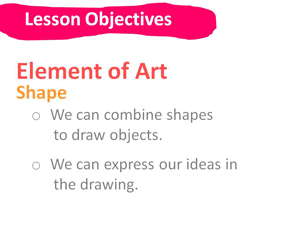
- Observe the shapes in the objects around them. |
| |
|
- See and appreciate the use of shapes to draw (eskimo and food). |
| |
|
- Express and apply art processes involving shapes effectively & creatively. |
| |
|
|
| Teaching Pedagogy: |
|
Teacher exposition (presentation) and demonstration (modeling the use of a new media / art making technique) |
| |
|
|
| Instructional Resources: |
|
Prepare by teacher: |
| |
|
- 1 piece of majong paper (for drawing demonstration) |
| |
|
- 1 big blot of blue tag (hold majong paper onto the whiteboard) |
| |
|
- 43 pieces of A4 drawing papers with printed assessment rubrics. |
| |
|
- 1 set of lecture slides |
| |
|
- Phone camera (to document art-making process for exhibition) |
| |
|
- Laptop, projector & remote controller |
| |
|
|
| |
|
Prepare by each student: |
| |
|
- Pencil, eraser & sharpener |
| |
|
|
| |
| Week 1 Lesson Plan |
| |
| Time |
Activity / Assessment for Learning |
Rationale |
Resources |
| 5 |
Get class to settle down: |
[Skillful Teacher |
Name list, |
| mins |
- Bring class to artroom. |
Move: Routine] |
Marker, |
| |
- IT Representative set up laptop. |
Get all the things |
Drawing papers, |
| |
- Teacher sticks majong paper on whiteboard (demonstration). |
ready at the start |
Laptop, |
| |
- Teacher distributes drawing papers. |
of the lesson. |
Majong paper, |
| |
- Students write name, class, index number and date. |
|
Blue tag |
| |
- Students to face blank page when they are done. |
|
|
| |
- Teacher checks for absentee(s). |
|
|
| ---------------------------------------------------------------------------------------------------------------------------------------------------- |
| |
Lesson Recap: |
[Skillful Teacher |
PowerPoint |
| |
Elements of Art (Geometric & Organic Shapes) |
Move: Routine] |
Slides 1 - 4 |
| |
|
To recap on |
(recap quickly) |
| |
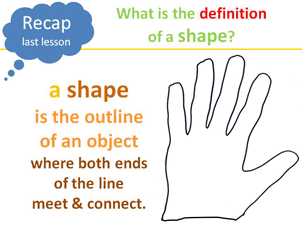
1. What is the definition of a shape? |
students' prior |
|
| |
Keywords (Knowledge): |
knowledge and |
|
| |
- Outline of object |
link them to the new |
|
| |
- 2 ends of a line meet and connects |
knowledge of each. |
|
| |
|
lesson. After getting |
|
| |
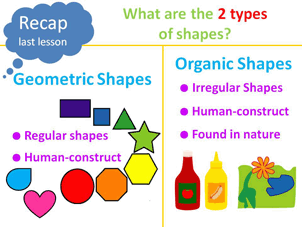
2. What are the 2 different types of shape? |
the response from |
|
| |
Keywords (Knowledge): |
the students, draw |
|
| |
- Geometric shape |
the egg yolk & egg |
|
| |
- Organic shape |
white beside |
|
| |
|
the egg photo to |
|
| |
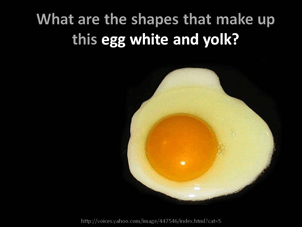
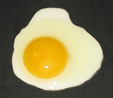
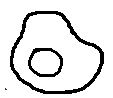
3. What are the shapes that make up this egg white and yolk? |
help all students |
Marker |
| |
Keywords (Knowledge): |
to visualise |
(draw egg on |
| |
- Egg yolk = circle = geometric shape |
the shapes in the |
the board & |
| |
- Egg white = curly shape = organic shape |
real object. |
mention each |
| |
  |
|
shape used) |
| |
[Credit: http://voices.yahoo.com/image/447546/index.html?cat=5] |
|
|
| |
|
|
|
| Time |
Activity / Assessment for Learning |
Rationale |
Resources |
| 5 |
Main Lesson: |
[Skillful Teacher |
|
| mins |
1. Gather attention: |
Move: Attention] |
|
| |
- All students to turn their chairs to face the front. |
Being able to focus |
|
| |
- Check that all students are paying attention before |
shows they are |
|
| |
. starting lesson - "Eyes on me" |
ready for lesson. |
|
| |
|
|
|
| |
2. Introduce lesson topic, objectives & media: |
Food is a familiar |
PowerPoint |
| |
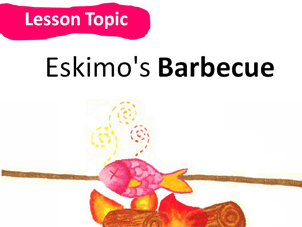
- Announce lesson topic: Eskimo's Barbecue. |
topic that serves |
Slides 5 - 7 |
| |
- Whoever loves to eat barbecue food, put up your hand [hook] |
to integrate |
(touch & go) |
| |
- Mention lesson objectives: EOA Shapes. |
the function of art |
|
| |
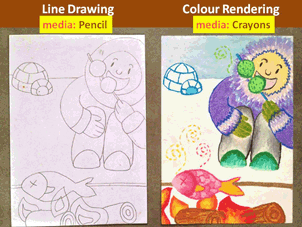
- Flash line drawing & colour rendered examples. |
in students’ lives |
|
| |
- Mention media used: pencil & crayons. |
and excite them in |
|
| |
|
the learning. |
|
| |
|
|
|
| |
Identify combination of shapes that make up each object: |
[Skillful Teacher |
PowerPoint |
| |
3. Draw eskimo: |
Move: Clarity] |
Slides 8 - 9 |
| |
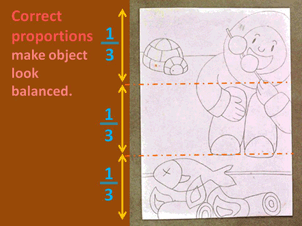
Keywords on proportions (Knowledge): |
Present information |
(Empasise - |
| |
- Eskimo's head takes up one-third of the paper. |
through the use of |
teach & demo |
| |
- Eskimo's body takes up another one-third of the paper. |
explanatory device |
on majong |
| |
- Use a pencil, divide paper into one-thirds. |
- Modelling |
paper with |
| |
- Erase all unneccessary lines after finished drawing. |
Thinking Aloud. |
pink crayon) |
| |
|
|
|
| |
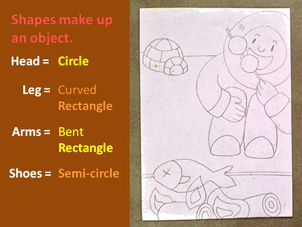
Keywords on shapes (Knowledge): |
Students learn by |
|
| |
- Head = Circle |
listening to the thought |
|
| |
- Legs = Rectangle with curved corners. |
process that goes |
|
| |
- Arms = Bent rectangle |
through teacher's mind |
|
| |
- Shoes = Semi-circles |
as she demonstrates |
|
| |
|
the drawing process. |
|
| |
Encourage students to invent and think freely: |
|
|
| |
- Imagine yourself as the eskimo. You can choose the gender |
|
|
| |
. & add any feature of yourself. Example, a mole or spectacles. |
|
|
| |
|
|
|
| 5 |
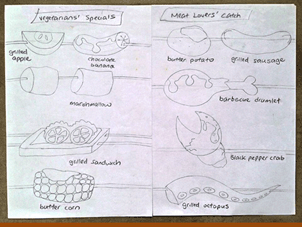
4. Draw food: |
Food references |
PowerPoint |
| mins |
Keywords on proportions (Knowledge): |
show only 1 food to |
Slides 10 - 18 |
| |
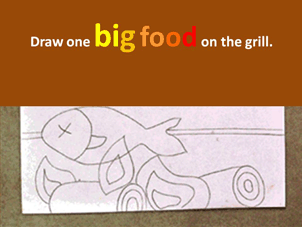
- Draw only 1 big food. |
keep students focused. |
(Empasize - |
| |
- If you put many food on 1 grill, they will look small. |
|
teach & demo |
| |
- It'll be hard to see them clearly after you colour them. |
|
on majong |
| |
|
|
paper with |
| |
Encourage students to invent and think freely: |
Contributing of ideas |
orange crayon) |
| |
- Recall the most mouth watering food in the past barbecues. |
excites students |
|
| |
- Those who have not been to barbecues can refer to the |
and develops a sense |
|
| |
. photos and choose what they most wish to eat. |
of ownership. |
|
| |
|
|
|
| |
Keywords on shapes (Knowledge): |
Step by step |
|
| |
- Show the process of changing basic shape into actual object. |
transformation |
|
| |
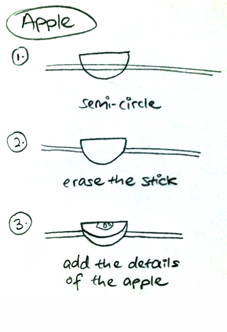 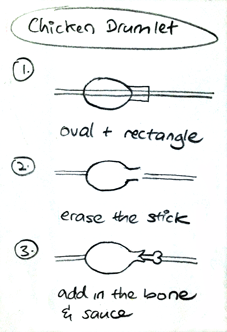 |
process helps students identify the combination of shapes that make up an object. |
|
| |
|
|
|
| |
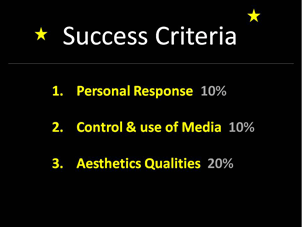
5. Explain criteria for success: |
[Skillful Teacher |
PowerPoint |
| |
- Go through expert grading level with regards to drawing. |
Move: Assessment] |
Slide 19 |
| |
|
This is an |
(Empasise |
| |
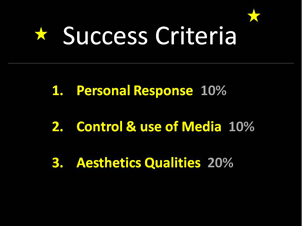
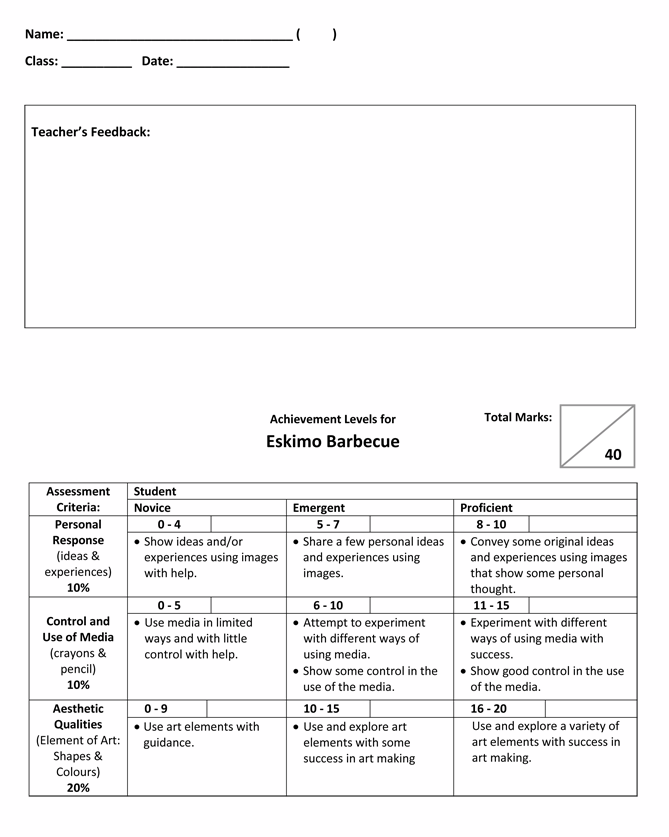
What does the teacher look out for in a drawing? |
assessment of |
on the key |
| |
Personal Response |
learning. Students |
points.) |
| |
"Convey some original ideas and experiences using |
are briefed on |
|
| |
images that show some personal thought." |
how they will be |
|
| |
Eskimo drawing shows creativity. He/she shows an |
assessed so that |
|
| |
interesting appearance and/or personality. |
they know what |
|
| |
|
they are required |
|
| |
Control and Use of Media |
to show to hit the |
|
| |
"Show good control in the use of the media (pencil)." |
highest mark tier. |
|
| |
No unwanted lines or embossed marks on the paper. |
|
|
| |
Student drew lightly and mistakes are easy to erase. |
Ask students to refer |
|
| |
|
to the assessment |
|
| |
Aesthetics Qualities |
criteria that is printed |
|
| |
"Use and explore a variety of art element (shapes) with |
behind their |
|
| |
success in artmaking." |
drawing paper as |
|
| |
Eskimo and food are drawn proportionately. |
teacher explains. |
|
| |
|
|
|
| Time |
Activity / Assessment for Learning |
Rationale |
Resources |
| 30 |
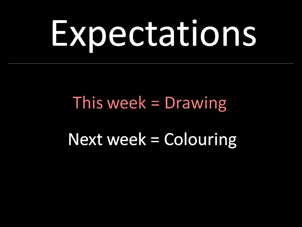
Assessed Activity: |
A proportionately |
PowerPoint |
| mins |
- State expectation: Finish drawing by the end of this lesson |
drawn work is |
Slide 20 |
| |
- Reason: Teacher would return with feedback on next lesson. |
half the success |
(touch & go) |
| |
Will learn to colour next lesson. |
achieved. The other |
|
| |
- Loop PowerPoint slides for students to recap and refer. |
half depends on |
|
| |
- Walk around to check and give immediate feedback. |
their colouring |
|
| |
|
next week. This |
|
| |
|
lesson takes into |
|
| |
|
consideration that |
|
| |
|
even the slowest |
|
| |
|
student has time |
|
| |
|
to finish the drawing. |
|
| |
|
|
|
| |
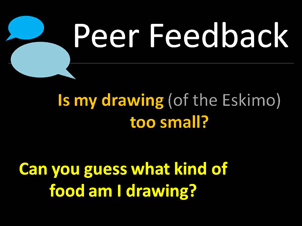
Encourage peer-feedback: |
Some students keep |
PowerPoint |
| |
- Is my drawing (of the eskimo) too small? |
asking feedback |
Slide 21 |
| |
- Can you guess what kind of food am I drawing? |
from teacher. |
(Emphasize |
| |
|
By teaching them |
on the |
| |
|
what to help each other |
2 questions) |
| |
|
to look out for, they are |
|
| |
|
able to critique their |
|
| |
|
peer's and their own |
|
| |
|
work. This helps also |
|
| |
|
free up teacher's time |
|
| |
|
to go through |
|
| |
|
everyone's work |
|
| |
|
|
|
| |
Documentation: |
Students learn to |
Camera |
| |
- Take photos of the artmaking process to be displayed |
value and respect |
|
| |
with students' work in the class. |
works and ideas of |
|
| |
|
their classmates. |
|
| |
|
Knowing that their |
|
| |
|
work will be displayed, |
|
| |
|
they will take |
|
| |
|
higher ownership |
|
| |
|
and responsibility |
|
| |
|
when doing their |
|
| |
|
work as well. |
|
| |
|
|
|
| Time |
Activity / Assessment for Learning |
Rationale |
Resources |
| 10 |
End Lesson: |
[Skillful Teacher |
PowerPoint |
| mins |
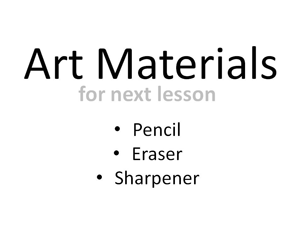
Materials to bring for next lesson: |
Move: Routine] |
Slide 21 |
| |
- Pencil |
Make it a habit |
(touch & go) |
| |
- Eraser |
for students to |
|
| |
- Sharpener |
be considerate and |
|
| |
|
to keep the table |
|
| |
- Hand in work to leader. Pack up. |
clean for the |
Collection tray |
| |
- Leaders place artworks in collection tray on teacher's table. |
next class. |
|
| |
- Teacher packs her stuff. |
|
|
| |
|
|
|
| |
Things to note on cleanliness: |
[Skillful Teacher |
|
| |
- Ensure the floor around each group is litter-free. |
Move: Discipline] |
|
| |
|
Getting students to |
|
| |
Reinforce of discipline and positive behaviour: |
clean up quickly after |
|
| |
- Groups that are ready put up their hand. |
an art lesson is a |
|
| |
- Reward each group with descending merit points (8 to 1) |
challenging task. |
|
| |
. based on their readiness and cleanliness. |
Competition among |
|
| |
- When all are ready, queue up in twos outside artroom |
groups rewards and |
|
| |
- Walk students back to classroom. Reach punctually. |
reinforces collective |
|
| |
|
team effort. |
|
| |
|
|
|
| Time |
Activity / Assessment for Learning |
Rationale |
Resources |
| - |
Follow-Up |
[Skillful Teacher |
Red pen, |
| |
- Teacher look through drawings to check for understanding. |
Move: Assessment] |
Date stamp, |
| |
- Write short constructive feedback on the back. |
Feedback helps |
Drawings |
| |
- Pick out students that need extra help. |
ensure that all the |
|
| |
|
students are on task |
|
| |
Examples of written feedback: |
and that every child |
|
| |
- Good, your drawings are proportionate. |
has learnt. |
|
| |
- Well-done! You show creative ideas in... |
|
|
| |
- Need to improve. Draw the food bigger. |
|
|
| |
- Need to improve. You have put in too much pressure |
|
|
| |
. when you draw. Draw lightly next time. |
|
|
| |
|
|
|
| |
Feedback for 3 types of learners: |
|
|
| |
- Those who have to make some minor modifications to their |
|
|
| |
. work knows what to do once they get the work back. |
|
|
| |
- Those who need extra help will be called out during the |
|
|
| |
. next lesson to get one-to-one consultation. |
|
|
| |
- Those who are on the right track can move on to colour. |
|
|
| |
|
|
|
| |
|
|
|
| |
| Week 2 Lesson Details |
| |
|
|
| |
|
|
| Prerequisite Knowledge: |
|
Elements of Art (Geometric & Organic Shapes) |
| |
|
Elements of Art (Colour Wheel, Primary & Secondary Colours) |
| |
|
|
| New Knowledge, |
|
Students acquire: |
| Competency & Skill: |
|
- 21st Century Competency: Critical and Inventive Thinking |
| |
|
- Knowledge of warm and cool colours |
| |
|
- Skill in using crayons to create furry texture and blending effects. |
| |
|
|
| New Art Vocabulary: |
|
Students learn the meaning and application of: |
| |
|
- Warm colours are like colours of the sun. They look cheerful and |
| |
|
give us a sense of warmth. |
| |
|
- Cool colours are like colours of the sky. They enable us to feel relax and cool. |
| |
|
|
| Lesson Objectives: |
|
At the end of the lesson, students should be able to: |
| |
|
- Observe the colours in the objects around them. |
| |
|
- See and appreciate the use of colours to represent temperature (winter cold |
| |
|
versus heat from the fire). |
| |
|
- Express and apply art processes involving colours effectively & creatively. |
| |
|
|
| Teaching Pedagogy: |
|
Teacher exposition (presentation) and demonstration (modeling the use of a new media / art making technique) |
| |
|
|
| Instructional Resources: |
|
Prepare by teacher: |
| |
|
- 1 piece of majong paper (for drawing demonstration) |
| |
|
- 1 big blot of blue tag (hold majong paper onto the whiteboard) |
| |
|
- 43 pieces of students' artworks |
| |
|
- 1 set of lecture slides |
| |
|
- 1 box of crayons for demonstration |
| |
|
- 8 boxes of crayons for students |
| |
|
- Phone camera (to document art-making process for exhibition) |
| |
|
- Visualiser |
| |
|
- Laptop, projector & remote controller |
| |
|
|
| |
|
Prepare by each student: |
| |
|
- Pencil, eraser & sharpener |
| |
|
|
| |
| Week 2 Lesson Plan |
| |
| Time |
Activity / Assessment for Learning |
Rationale |
Resources |
| 5 mins |
Get class to settle down: |
[Skillful Teacher |
Name list, |
| |
- Bring class to artroom. |
Move: Routine] |
Students' works, |
| |
- IT Representative set up laptop. |
Get all the things |
Marker |
| |
- Teacher sticks last week's drawing on whiteboard. |
ready at the start |
|
| |
- Group leaders return back artworks. |
of the lesson. |
|
| |
|
|
|
| Time |
Activity / Assessment for Learning |
Rationale |
Resources |
| 2 mins |
Lesson Recap: |
[Skillful Teacher |
PowerPoint |
| |
Draw more complex objects using EOA Shapes |
Move: Momentum] |
Slides 1 - 3 |
| |
|
In this continued |
(Touch & go |
| |
- Flash 5 selected photos of their drawing process [hook]. |
lesson, students |
on students' |
| |
- Flash at most 4 good drawings. |
need to be |
works. Instead, |
| |
|
reminded of |
focus on asking |
| |
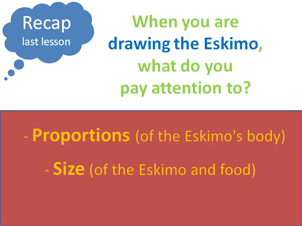
When you are drawing the Eskimo, what are the 2 things |
what they have |
the questions) |
| |
that you pay attention to? |
done last week. |
|
| |
Keywords (Knowledge): |
|
|
| |
- Proportions (of the Eskimo's body) |
Take this |
|
| |
- Size (of the Eskimo and food) |
opportunity for |
|
| |
|
students to see |
|
| |
(Follow-up) What are the reasons? |
how creative their |
|
| |
Keywords (Knowledge): |
peers' work can be. |
|
| |
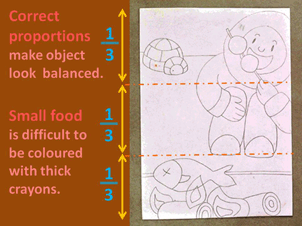
- Correct proportions make Eskimo look well-balanced. |
It is also a time |
|
| |
- Small food is difficult to be coloured with thick crayons. |
to praise students |
|
| |
|
who shown effort. |
|
| |
|
|
|
| Time |
Activity / Assessment for Learning |
Rationale |
Resources |
| 8 mins |
Main Lesson: |
[Skillful Teacher |
- |
| |
1. Gather attention: |
Move: Attention] |
|
| |
- All students to turn their chairs to face the front. |
Being able to focus |
|
| |
- Check that all students are paying attention before |
shows they are |
|
| |
. starting lesson - "Eyes on me" |
ready for lesson. |
|
| |
|
|
|
| |
|
|
|
| |
2. Introduce Warm & Cool Colours in the Colour Wheel: |
Art theory. |
PowerPoint |
| |
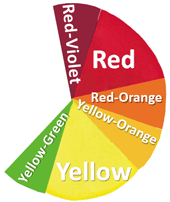 |
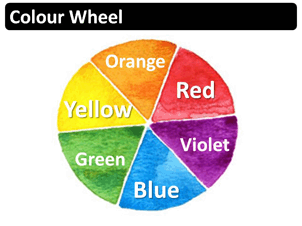
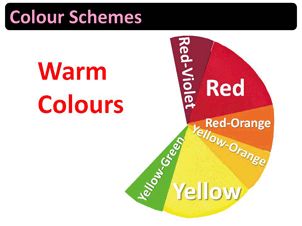
Warm colours are like colours of the sun. They look cheerful and give us a sense of warmth. |
|
Slides 4 - 8 |
| |
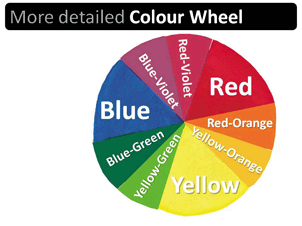
| There are 2 greens in the colour wheel. Do you think yellow-green contains more yellow or blue? It contains more yellow and yellow is a warm colour. Therefore, it is considered a warm colour. The same goes for red-violet. |
| |
|
|
|
| |
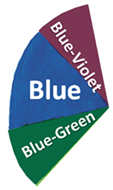 |
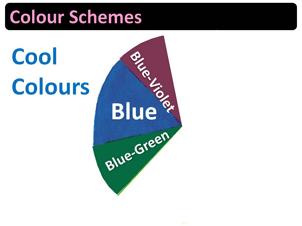
Cool colours are like colours of the sky. They enable us to feel relax and cool. |
|
|
| |
| Do you think blue-violet contains more blue or red? Blue. Both blue-green and blue-violet contains more blue than red or yellow, hence both are considered cool colours. |
| |
|
|
|
| |
Identify the warm and cool portions in your drawing: |
|
|
| |
Warm colours = Food and fire |
|
|
| |
Cool colours = Eskimo and igloo |
|
|
| |
|
|
|
| |
|
|
|
| |
3. Create furry texture & blending effect: |
[Skillful Teacher |
Majong Paper |
| |
Demonstrate technique on the majong paper that has been |
Move: Clarity] |
|
| |
pasted on the whiteboard. |
Present information |
|
| |
|
through the use of |
|
| |
Furry texture = Eskimo's hood |
explanatory device |
|
| |
Blending = fire |
- Modelling |
|
| |
|
Thinking Aloud. |
|
| |
|
|
|
| |
4. Explain criteria for success: |
Ask students to |
Assessment |
| |
- Go through expert grading level with regards to colouring. |
refer to the |
Criteria |
| |
|
assessment |
|
| |
What does the teacher look out for in your colouring? |
criteria that is |
|
| |
Control and Use of Media |
printed behind their |
|
| |
"Show good control in the use of the media (crayon)." |
drawing paper as |
|
| |
Colour within the area. Cover all the white spaces. |
teacher explains. |
|
| |
|
|
|
| |
Aesthetics Qualities |
They will be able |
|
| |
"Use and explore a variety of art element (colour) with |
to refer to the marks |
|
| |
success in artmaking." |
to see how well |
|
| |
Identify and arrange the warm and cool colours correctly. |
they fare for |
|
| |
|
for each component. |
|
| |
|
|
|
| Time |
Activity / Assessment for Learning |
Rationale |
Resources |
| 35 |
Assessed Activity: |
Teacher goes |
PowerPoint |
| mins |
- State expectation: Finish colouring and submit work |
around the class |
Slide 10, |
| |
by the end of this lesson. |
to confirm an overall |
8 boxes |
| |
- Leaders collect crayons for the group. |
understanding of |
of crayons |
| |
- Walk around to check and give immediate feedback. |
the new knowledge |
|
| |
|
and skills taught |
|
| |
|
today. |
|
| |
|
|
|
| |
Documentation: |
Students learn to |
Camera |
| |
- Take photos of the artmaking process to be displayed |
value and respect |
|
| |
with students' work in the class. |
works and ideas of |
|
| |
|
their classmates. |
|
| |
|
Knowing that their |
|
| |
|
work will be |
|
| |
|
displayed, |
|
| |
|
they will take |
|
| |
|
higher ownership |
|
| |
|
and responsibility |
|
| |
|
when doing their |
|
| |
|
work as well. |
|
| |
|
|
|
| Time |
Activity / Assessment for Learning |
Rationale |
Resources |
| 10 |
End Lesson: |
[Skillful Teacher |
PowerPoint |
| mins |
Materials to bring for next lesson: |
Move: Routine] |
Slide 11 |
| |
- Pencil |
Make it a habit |
(touch & go) |
| |
- Eraser |
for students to |
|
| |
- Sharpener |
be considerate and |
|
| |
|
to keep the table |
|
| |
- Hand in work to leader. Pack up. |
clean for the |
Collection tray |
| |
- Leaders place artworks in collection tray on teacher's table. |
next class. |
|
| |
- Check for the correct number of crayons returned. |
|
|
| |
- Teacher packs her stuff. |
|
|
| |
|
|
|
| |
Things to note on cleanliness: |
[Skillful Teacher |
|
| |
- Ensure the floor around each group is litter-free. |
Move: Discipline] |
|
| |
|
Getting students to |
|
| |
Reinforce of discipline and positive behaviour: |
clean up quickly after |
|
| |
- Groups that are ready put up their hand. |
an art lesson is a |
|
| |
- Reward each group with descending merit points (8 to 1) |
challenging task. |
|
| |
. based on their readiness and cleanliness. |
Competition among |
|
| |
- When all are ready, queue up in twos outside artroom |
groups rewards and |
|
| |
- Walk students back to classroom. Reach punctually. |
reinforces collective |
|
| |
|
team effort. |
|
| |
|
|
|